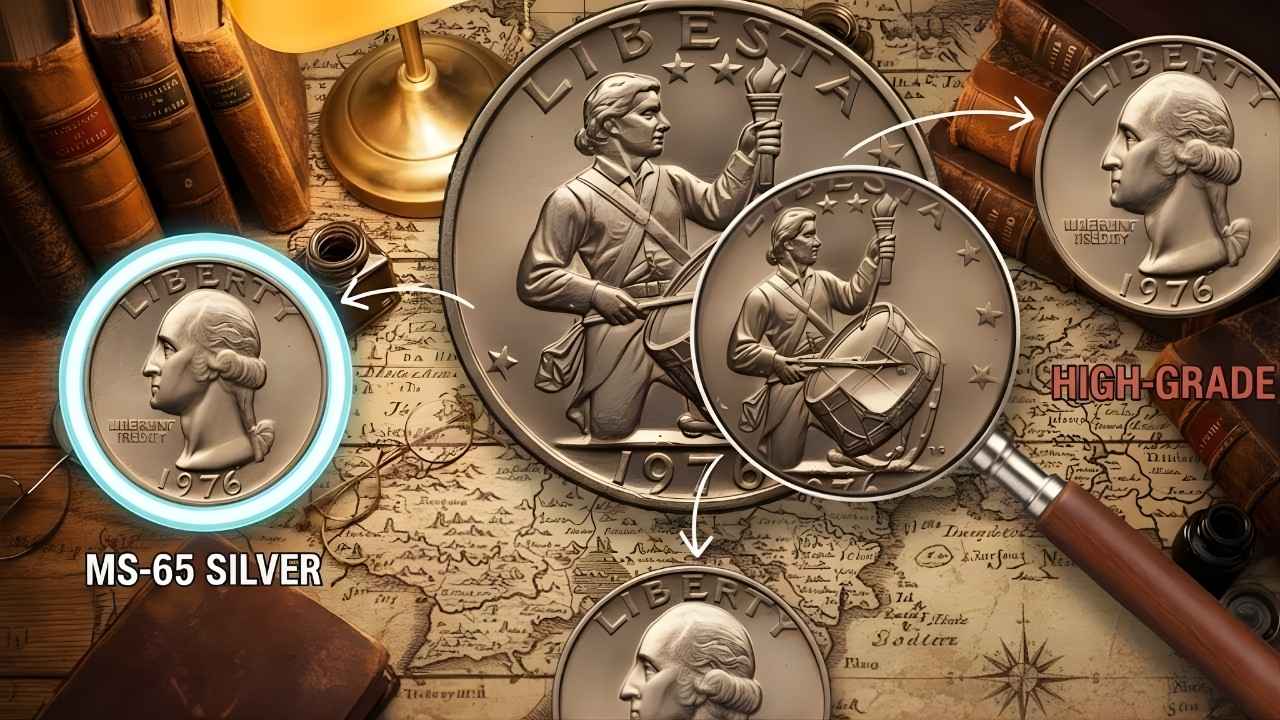
The year 1976 was a defining moment in American history, marking two centuries since the Declaration of Independence. To honor this milestone, the United States Mint released a special series of coins, with the Bicentennial quarter becoming the most recognizable. Instead of the traditional eagle reverse, the coin features a colonial drummer accompanied by a torch and thirteen stars symbolizing the original colonies. Designed by Jack L. Ahr, the quarter carries the dual date 1776–1976, instantly setting it apart from standard issues. While billions were minted, not all Bicentennial quarters are equal in the eyes of collectors.
Why Bicentennial Quarters Still Attract Attention
Bicentennial quarters remain popular because they combine historical significance with widespread availability. Nearly every collector encountered one at some point, often before realizing its meaning. Their patriotic design, connection to a national celebration, and variety of mint issues give them lasting appeal. While most examples are common, specific versions and conditions elevate certain coins far above face value, keeping collectors engaged decades later.
The Four Bicentennial Quarters Collectors Focus On
Although several versions of the Bicentennial quarter exist, collectors generally focus on four major circulating and collectible types. Each stands out for different reasons, ranging from condition rarity to precious metal content. Understanding these distinctions is essential for identifying which coins deserve closer attention.
Philadelphia Bicentennial Quarter With No Mint Mark
The Philadelphia Mint produced Bicentennial quarters without mint marks in enormous quantities. These coins flooded circulation and remain common today. However, high-grade examples are surprisingly difficult to find. Coins that escaped heavy circulation and retained sharp details, clean surfaces, and strong luster are scarce. Pieces graded MS67 or higher by professional grading services can sell for significant premiums, making them highly desirable among condition-focused collectors. Searching old rolls and collections is often the best way to locate these elusive high-grade Philadelphia issues.
Denver Mint Bicentennial Quarter
Denver Mint Bicentennial quarters carry a small D mint mark and are known for generally stronger strikes than their Philadelphia counterparts. While most circulated examples are worth only face value, collectors prize Denver coins with minimal contact marks and strong eye appeal. Error varieties originating from the Denver Mint add another layer of value. Doubled dies, off-center strikes, and clipped planchets can dramatically increase desirability, especially when authenticated and graded. These error coins are among the most exciting Bicentennial discoveries.
San Francisco Clad Proof Bicentennial Quarter
San Francisco produced clad proof Bicentennial quarters specifically for collectors, selling them in proof sets rather than releasing them for circulation. These coins are instantly recognizable by their mirror-like fields and frosted design elements. While most clad proofs remain affordable, top-graded examples are far less common. Coins achieving PR69 or PR70 grades are especially sought after due to their flawless appearance. Occasionally, proof quarters entered circulation, creating unusual finds that intrigue collectors.
San Francisco 40 Percent Silver Bicentennial Quarter
The most valuable Bicentennial quarter is the San Francisco 40 percent silver version. These coins were sold in special mint sets and never intended for circulation. Their silver content alone gives them intrinsic value, but collector demand pushes prices much higher. High-grade silver Bicentennial quarters, particularly those with strong luster and minimal marks, can command hundreds or even thousands of dollars at auction. For many collectors, this version represents the centerpiece of a Bicentennial quarter collection.
How Condition and Grading Affect Value
Condition plays a decisive role in determining the value of Bicentennial quarters. Even rare varieties lose much of their appeal if heavily worn or damaged. Professional grading provides authentication and a standardized assessment of condition, which helps establish trust in the marketplace. Coins with higher grades are easier to sell, easier to insure, and often appreciate more consistently over time. For potentially valuable Bicentennial quarters, grading is often a worthwhile investment.
How to Identify Valuable Bicentennial Quarters
Identifying a valuable Bicentennial quarter starts with careful observation. Mint marks reveal where the coin was struck, while surface quality indicates how well it survived circulation. Weight and appearance help distinguish silver versions from clad coins. A magnifying glass is useful for spotting doubling or other minting errors. Proper storage in protective holders prevents further wear and preserves long-term value once a promising coin is found.
Market Trends and Collector Demand
Interest in Bicentennial quarters has remained steady, supported by nostalgia and historical significance. Auction records consistently show strong demand for high-grade examples, proof coins, and silver issues. As the United States approaches its 250th anniversary, attention on Bicentennial-era coinage is expected to grow. This renewed interest may further elevate prices for the best-preserved and rarest examples.
Why Bicentennial Quarters Belong in a Collection
Bicentennial quarters offer an appealing balance between accessibility and collectibility. They are affordable entry points for new collectors while still offering challenges for advanced numismatists. Their design captures a unique moment in American history, and the possibility of discovering a valuable example keeps the hunt exciting. Few coins combine history, artistry, and discovery potential as effectively as the 1976 Bicentennial quarter.
Final Verdict
The 1976 Bicentennial quarter stands as a lasting symbol of America’s 200th anniversary and remains one of the most collected modern U.S. coins. While most examples are common, select varieties stand out for their rarity and value, including high-grade Philadelphia issues, Denver error coins, San Francisco clad proofs, and San Francisco 40 percent silver quarters. With careful examination and an understanding of what makes these coins special, collectors can still uncover meaningful value in this iconic piece of American coinage.
Disclaimer
This article is for informational purposes only and is based on publicly available information, historical numismatic references, and general market observations, which may vary by region and are subject to change due to market conditions, metal prices, new discoveries, or official updates. Coin values depend on factors such as authenticity, condition, rarity, grading, and collector demand, and no prices or trends mentioned are guaranteed. Readers are strongly advised to verify all details with certified coin dealers, professional grading services, or reputable auction records before making any buying, selling, or investment decisions.