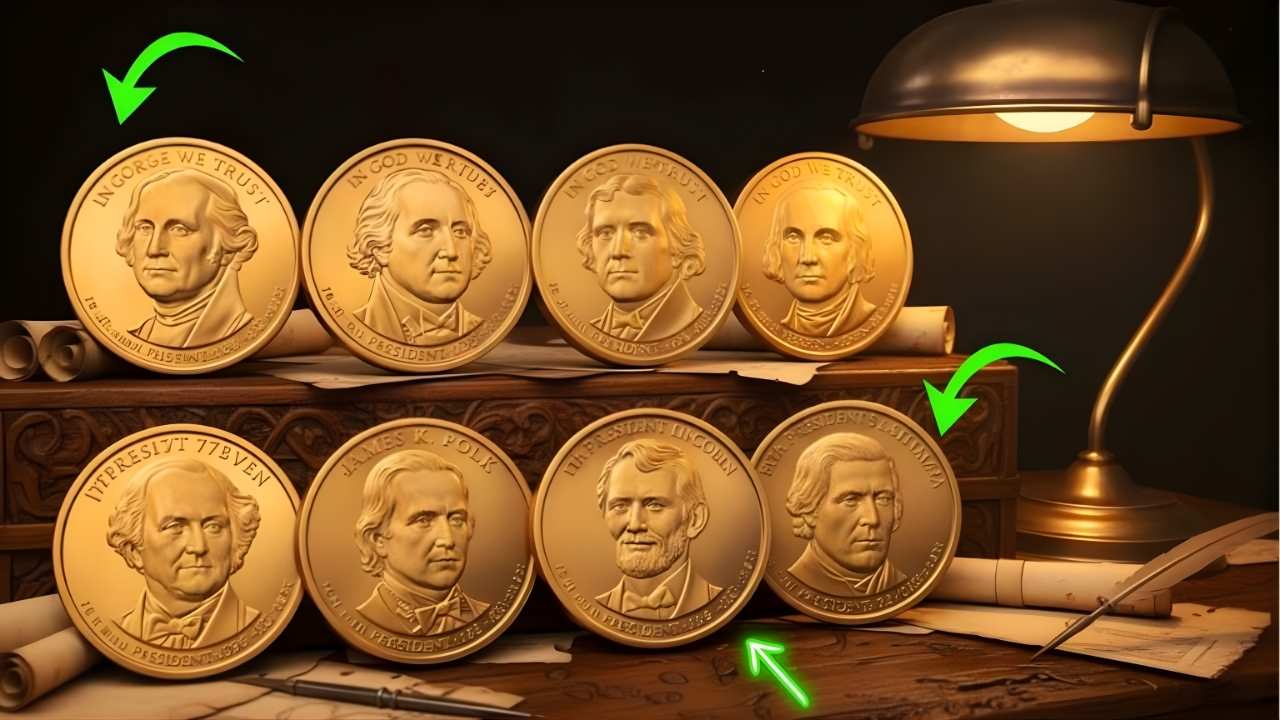
The Presidential $1 Coin Program was launched in 2007 to honor former U.S. presidents while encouraging renewed interest in coin collecting. Each year introduced multiple designs, and millions were minted for circulation. While most Presidential Dollar coins still trade at face value, a small percentage have become highly valuable in the collector market. Their rising worth is largely driven by minting errors, unusual edge lettering mistakes, limited proof issues, and strong collector demand. As 2026 approaches, interest in these coins continues to grow, especially among collectors hunting for overlooked treasures hiding in everyday collections.
Why Some Presidential Dollar Coins Are Worth More
Not all Presidential Dollar coins are created equal. Value depends on a combination of rarity, condition, and uniqueness. Coins that slipped through quality control with missing or doubled edge lettering are especially desirable. Others gain value due to special finishes such as satin or proof strikes that were never intended for circulation. Low mintage years and professionally graded coins also command premium prices. As collectors become more knowledgeable, demand for verified error coins continues to push prices higher.
Most Valuable Presidential Dollar Coins in 2026
Below is a value comparison table highlighting some of the most sought-after Presidential Dollar coins collectors are actively pursuing in 2026.
Presidential Dollar Coin Value Table
Coin Name Estimated Value Range Key Feature
2007 George Washington Dollar $3,000–$15,000 Missing edge lettering
2007 Thomas Jefferson Dollar $2,500–$10,000 Double edge lettering
2008 Martin Van Buren Dollar $1,500–$7,500 Proof error
2007 John Adams Dollar $1,200–$6,000 Partial edge lettering
2009 James K. Polk Dollar $1,000–$5,000 Satin finish error
2010 Abraham Lincoln Dollar $1,500–$4,500 Rotated die
2007 James Madison Dollar $1,200–$4,000 Broadstrike error
2012 Grover Cleveland Dollar $900–$3,500 Low mintage proof
2014 Dwight D. Eisenhower Dollar $1,000–$3,000 Missing edge lettering
2008 James Monroe Dollar $1,000–$3,500 Doubled edge lettering
2007 George Washington Dollar Missing Edge Lettering
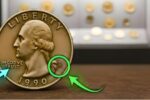
This coin is widely considered the most famous Presidential Dollar error. The edge inscriptions, which include the year, mint mark, and motto, were accidentally omitted on some coins. The smooth edge instantly sets these apart and makes them extremely valuable. High-grade examples certified by professional grading services can sell for five figures.
2007 Thomas Jefferson Dollar Double Edge Lettering
Double edge lettering occurs when a coin is sent through the edge-inscription process twice. The result is overlapping or inverted text, creating a dramatic visual effect. Collectors prize clear and bold doubling, especially on coins preserved in mint condition.
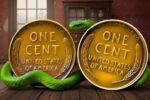
2008 Martin Van Buren Dollar Proof Error
Proof coins are produced with specially polished dies and are not meant for circulation. Errors on proof Presidential Dollars are rare, making them especially valuable. Misaligned or incorrect edge lettering on Martin Van Buren proof coins has made this issue a standout among error collectors.
2007 John Adams Dollar Partial Edge Lettering
Some John Adams Dollar coins feature faint or incomplete inscriptions along the edge. These errors occurred during early production when the edge lettering process was still being refined. Coins with clearly visible missing sections tend to command higher premiums.
2009 James K. Polk Dollar Satin Finish Error
Satin finish coins were intended for collector sets, not circulation. A small number of Polk Dollars with this finish entered circulation by mistake. Their distinct texture and softer appearance make them easy to identify and highly collectible.
2010 Abraham Lincoln Dollar Rotated Die Error
Rotated die errors happen when the obverse and reverse designs are misaligned. When the coin is flipped, the design appears rotated rather than upright. Severe rotations are especially desirable and can significantly increase the coin’s market value.
2007 James Madison Dollar Broadstrike Error
Broadstrike errors occur when a coin is struck without the retaining collar, causing it to expand outward. These coins often lack a defined rim and appear wider than normal. Madison Dollars with clear broadstrike characteristics are increasingly popular with error collectors.
2012 Grover Cleveland Dollar Low Mintage Proof
Grover Cleveland is the only president to serve two non-consecutive terms, making his coins unique within the series. Proof issues from his second term had relatively low mintages, and deep cameo examples are particularly sought after in 2026.
2014 Dwight D. Eisenhower Dollar Missing Edge Lettering
Edge lettering errors became far less common in later years of the program, which makes Eisenhower Dollars with missing inscriptions especially valuable. Their scarcity adds to their appeal, particularly among advanced collectors.
2008 James Monroe Dollar Doubled Edge Lettering
Doubled inscriptions on Monroe Dollars are among the most visually striking errors in the series. Coins showing strong, readable doubling consistently attract attention at auctions and private sales.
How to Protect and Increase Coin Value
Collectors should never clean Presidential Dollar coins, as cleaning can permanently reduce value. Proper storage in protective holders helps preserve surface quality. Submitting coins to reputable grading services such as PCGS or NGC can authenticate errors and increase buyer confidence. Keeping up with auction trends and verifying authenticity before selling are also essential steps for maximizing returns.
Disclaimer
This article is provided strictly for informational and educational purposes only and is based on publicly available data, collector reports, and general market observations that may change over time due to market conditions, regional demand, grading standards, or updated numismatic research. Coin values mentioned are estimates and should not be considered financial or investment advice. Readers are strongly encouraged to verify all details through official sources, professional grading services, or qualified numismatic experts before making any buying, selling, or investment decisions.